More than relief. More than meditation.
A meditation app gives you a practice you do.
A relief app gives you a state you reach — and lose by tomorrow.
KiFlow gives you a skill you build and a self you grow into. It finds the pattern beneath your stress, shifts it, and trains that shift until returning to Flow becomes second nature.
That's the difference between feeling better for a moment and becoming more resilient for life.
Your stress isn't random — it's a pattern. And patterns can change.
Every stress reaction is a survival strategy your nervous system built to meet a real need — to feel safe, to belong, to be respected, to stay in control. The strategy once protected you. But running on autopilot, it keeps you stuck. KiFlow helps you shift each survival strategy into the growth strategy that meets the same need a truer way — and as you do, you rise toward Flow.
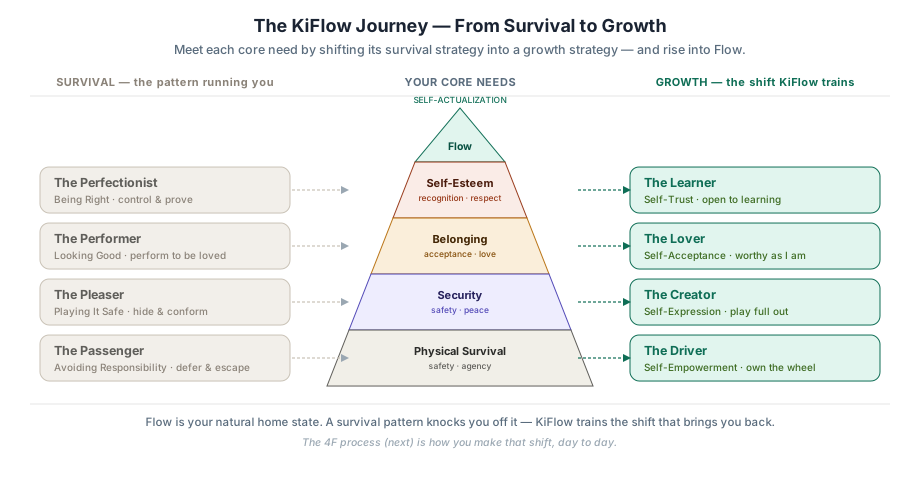
Flow — calm, centered, creative — is your natural home state. A survival pattern knocks you off it. KiFlow trains the shift that brings you back.
The four shifts
- Running the Perfectionist patternThe Learner: from being right to self-trust.
- Running the Performer patternThe Receiver: from looking good to self-acceptance.
- Running the Pleaser patternThe Contributor: from playing it safe to self-expression.
- Running the Passenger patternThe Driver: from avoiding responsibility to self-empowerment.
The KiFlow 4F Stress Resilience Process
KiFu, your AI guide, walks you through the same four quiet steps each time — Facing, Focusing, Freeing, Flowing — moving you from a stress reaction back to Flow in just a few minutes.
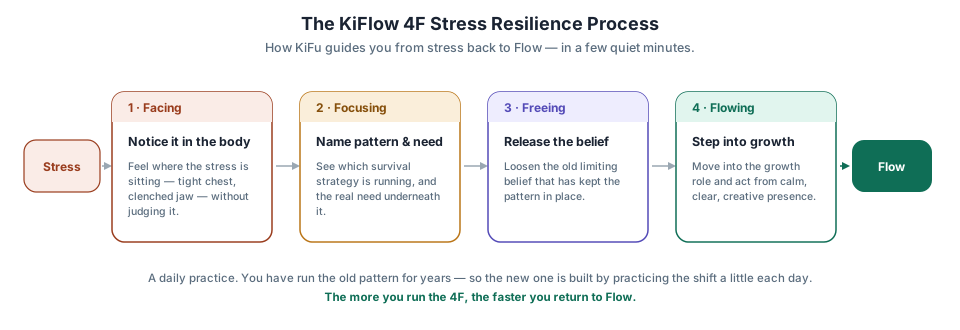
You've run the old pattern for years, so the new one is built by practicing the shift a little each day. The more you run the 4F, the faster you return to Flow.
THE KIFLOW TRAINING CENTER
Where a shift becomes a skill
A single shift feels good. A daily practice changes your life. Because you've practiced your survival patterns for years, lasting change comes from practicing new growth patterns — a little, every day. The KiFlow Training Center is where KiFu guides you through the practices that build that skill over time.
Visioning
Aim at who you're becoming: purpose, creativity, the life Flow makes possible.
Take Empowered Action
Practice ownership and agency; move from passenger to driver.
Growth Mindset Work
Reframe the survival roles into growth roles; the heart of the shift.
Breathwork
Settle the nervous system into the calm, safe state where change can land.
Gratitude
Meet your need for worth and belonging from the inside out.
This is the difference between a stress tool you reach for in a crisis and a daily practice that quietly rebuilds how you meet life. KiFlow is built to support that growth — one practice, one day at a time.
Grounded in how your nervous system actually works
Flow
ventral vagal
Calm, connected, creative — your baseline when you feel safe.
Fight or flight
sympathetic
The alarm is on — racing, tense, reactive.
Shutdown
dorsal vagal
Overwhelm protection — foggy, flat, checked out.
What fires together, wires together — which is exactly why daily practice works: you're wiring a new default.
Ready to Shift Your Stress?
Start your free session today. No credit card required.
Start Your Free KiFlow Session Today